NVIDIA DGX Spark
Use this to tell your different configurations apart in your cart — handy if you order the same product with different options.
Full Specifications
Compute & Memory
Chip
NVIDIA GB10 Grace Blackwell Superchip
CPU
20-core Arm (10 × Cortex-X925 + 10 × Cortex-A725)
Unified Memory
128 GB LPDDR5x (273 GB/s bandwidth)
AI Performance
1 PetaFLOP (FP4)
Storage & Physical
Storage
4 TB NVMe SSD, self-encrypting (PCIe Gen4)
Dimensions
150 x 150 x 50.5 mm
Weight
1.2 kg
Display Outputs
Up to 3 simultaneous displays (HDMI + USB4 DisplayPort alt-mode)
Power & Networking
Power Supply
240 W USB-C PD adapter
Networking
NVIDIA ConnectX-7 Smart NIC, dual 200 Gbps QSFP + 10 GbE RJ-45
Wireless
Wi-Fi 7, Bluetooth 5.4
Software & Security
Operating System
NVIDIA DGX OS (Ubuntu 24.04 LTS), full CUDA AI stack pre-installed
Agentic AI
NemoClaw sandboxed agent framework included
Security
TPM 2.0, Secure Boot, self-encrypting SSD
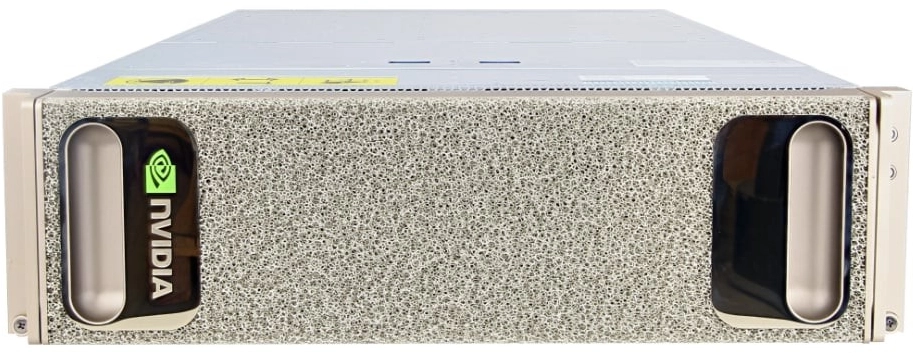
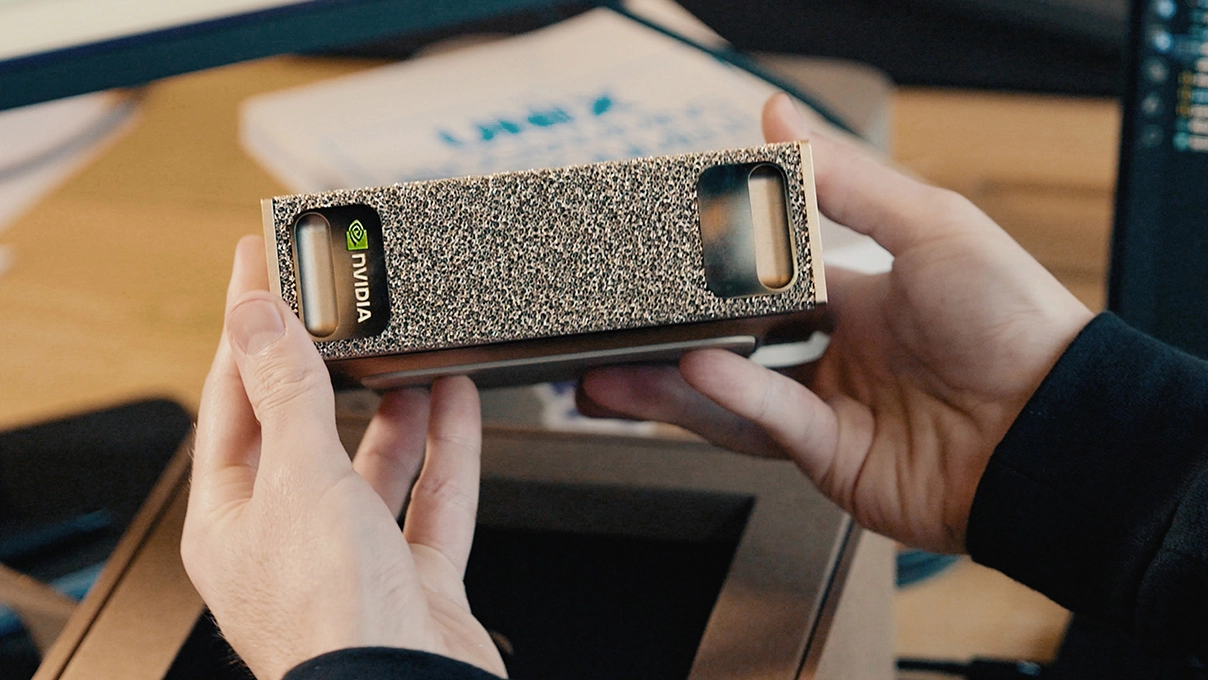
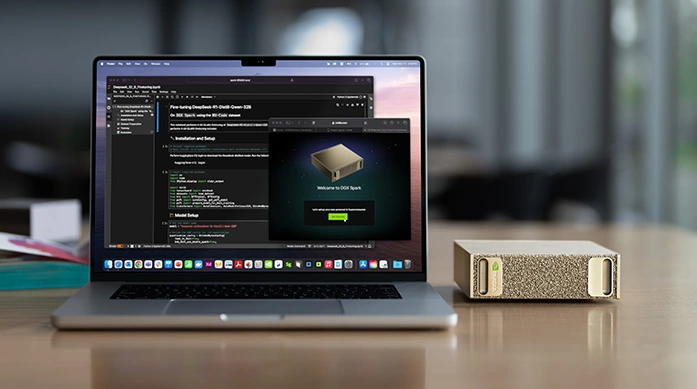
The NVIDIA DGX Spark is the reference desktop system for the NVIDIA GB10 Grace Blackwell Superchip, first shown publicly in January 2025 under the working name Project DIGITS before shipping under its final name. As the platform NVIDIA itself designed, validated, and continues to update directly, it packages 1 petaFLOP of FP4 AI performance and 128 GB of coherent unified memory into a 1.2 kg enclosure small enough to sit on a desk next to a keyboard.
Because DGX Spark is NVIDIA's own reference design, it is also the platform on which new GB10 ecosystem capabilities are validated first. Following NVIDIA's GTC 2026 conference in late March 2026, official support for 4-node RoCE clustering — raising a single deployment to 512 GB of shared unified memory — was confirmed on DGX Spark before being adopted across partner hardware, alongside the existing 2-unit direct-linking capability already standard across the GB10 lineup.
Hardware Specifications
At its core is the NVIDIA GB10 Grace Blackwell Superchip, combining a 20-core Arm processor (10 × Cortex-X925 performance cores + 10 × Cortex-A725 efficiency cores) with a Blackwell-generation GPU featuring 5th-generation Tensor Cores and native FP4 sparsity support. The two are bridged by 128 GB LPDDR5x unified memory delivering 273 GB/s of coherent bandwidth shared between CPU and GPU, removing the copy overhead that separate CPU/GPU memory pools normally introduce. Storage is a 4 TB self-encrypting PCIe Gen4 NVMe SSD, sized to hold large model checkpoints and datasets locally.
Software: The Full NVIDIA AI Stack, Pre-Installed
DGX Spark ships with NVIDIA DGX OS (Ubuntu 24.04 LTS) and the complete NVIDIA AI software stack pre-installed and validated against the hardware — CUDA, cuDNN, TensorRT, and the NVIDIA Container Runtime are ready at first boot. NVIDIA NIM microservices allow supported models to be deployed as optimized inference containers without manual tuning, and the same containers carry forward unchanged when a workload is later moved to NVIDIA DGX Cloud or a datacenter DGX system. A continuously maintained set of official playbooks covers common workflows — from vLLM and TensorRT-LLM serving to fine-tuning with NeMo and Unsloth — reducing setup time for both first-time and advanced users.
For agentic AI workloads, DGX Spark includes NemoClaw, NVIDIA's sandboxed agent-execution layer. It enforces policy-based access control around autonomous agents, logs their actions for audit purposes, and has been optimized to deliver measurably faster local agent inference in recent DGX OS updates.
Connectivity & Networking
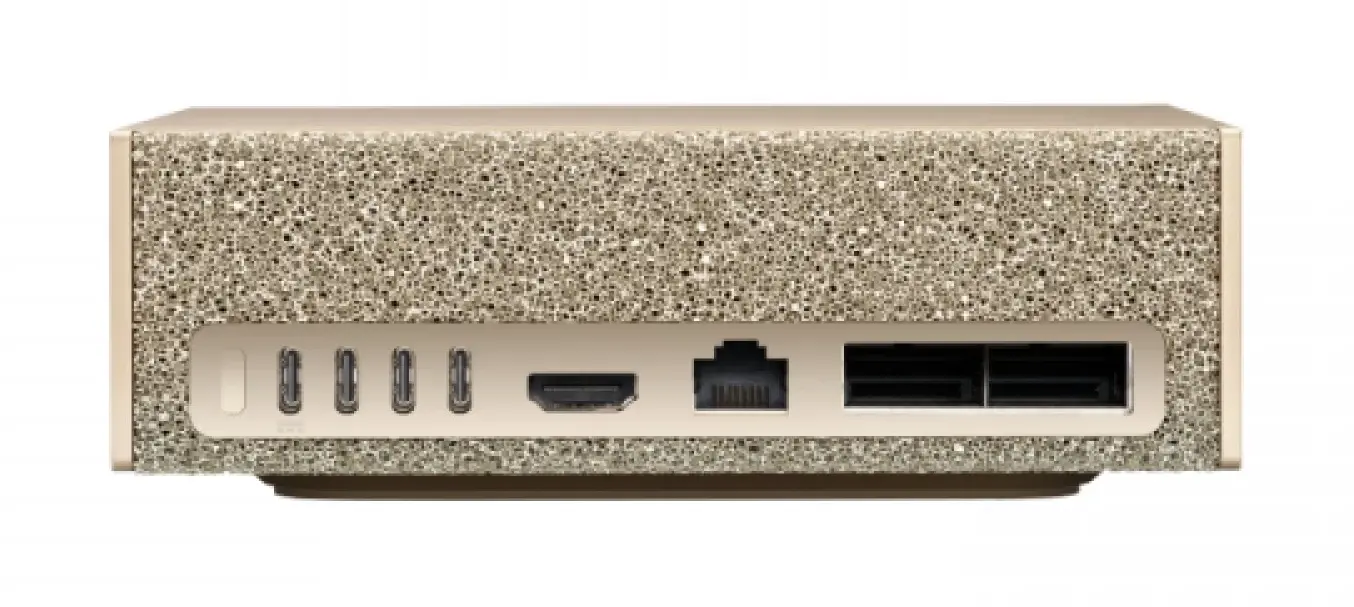
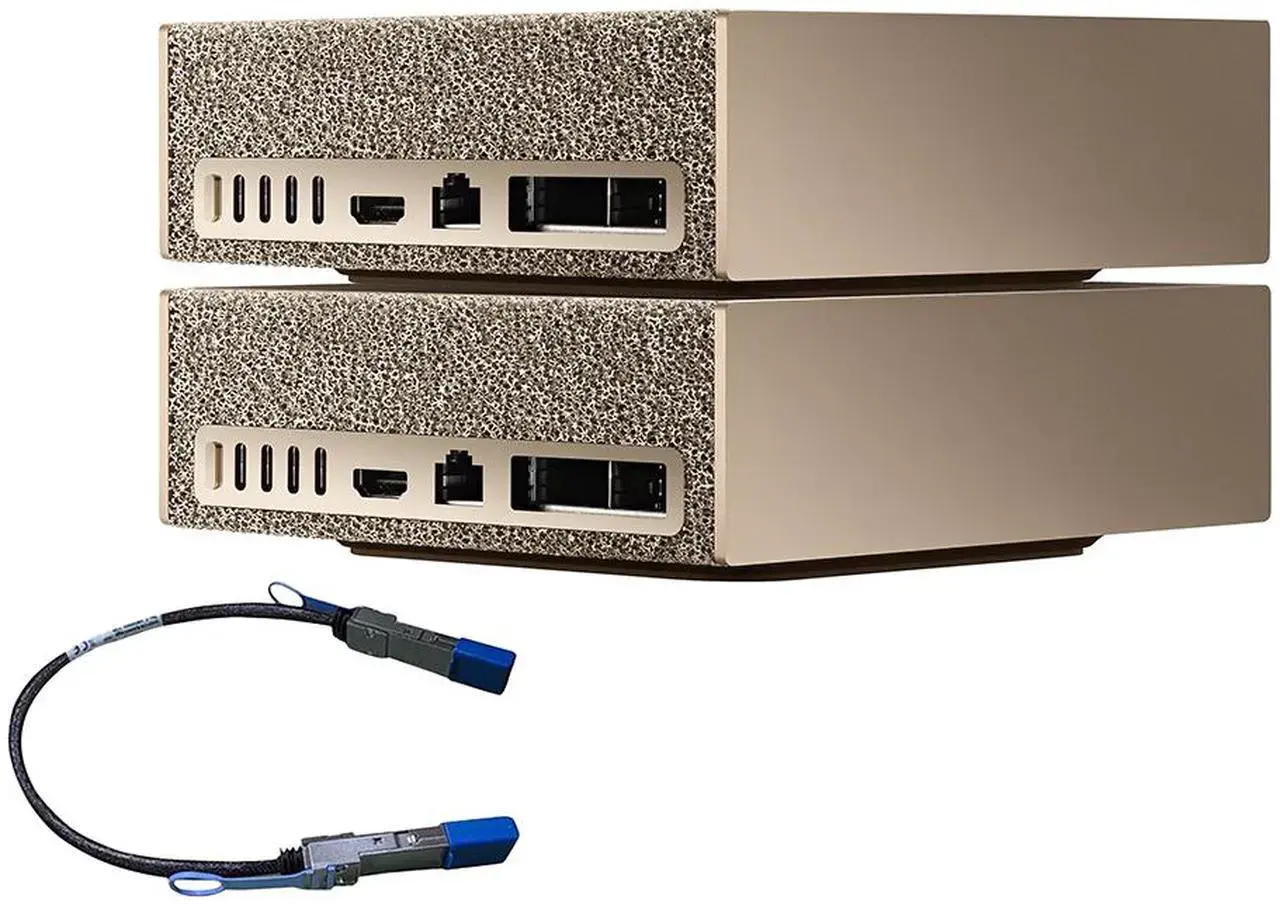
Networking is built around an NVIDIA ConnectX-7 Smart NIC with dual 200 Gbps QSFP ports, used for direct unit-to-unit linking or, in larger deployments, connection to a managed RoCE switch fabric. Additional onboard connectivity covers 10 GbE Ethernet (RJ-45), Wi-Fi 7, and Bluetooth 5.4. Four USB4 Type-C ports support DisplayPort output for local multi-monitor use — up to three simultaneous displays — alongside HDMI, letting the same unit serve as both a development workstation and an always-on inference server.
Enterprise Management & Security
DGX Spark supports air-gapped deployment for environments without internet connectivity, including custom ISO creation via Cloud-init and USB-based OS and driver updates — enabling fleets to be provisioned and maintained without external network dependency. Storage is self-encrypting by default, and the platform includes TPM 2.0 and Secure Boot, giving it a security baseline suited to regulated, data-sensitive deployments where processing must stay fully on-premises.
Scaling: Single, 2-Unit, and 4-Unit Configurations
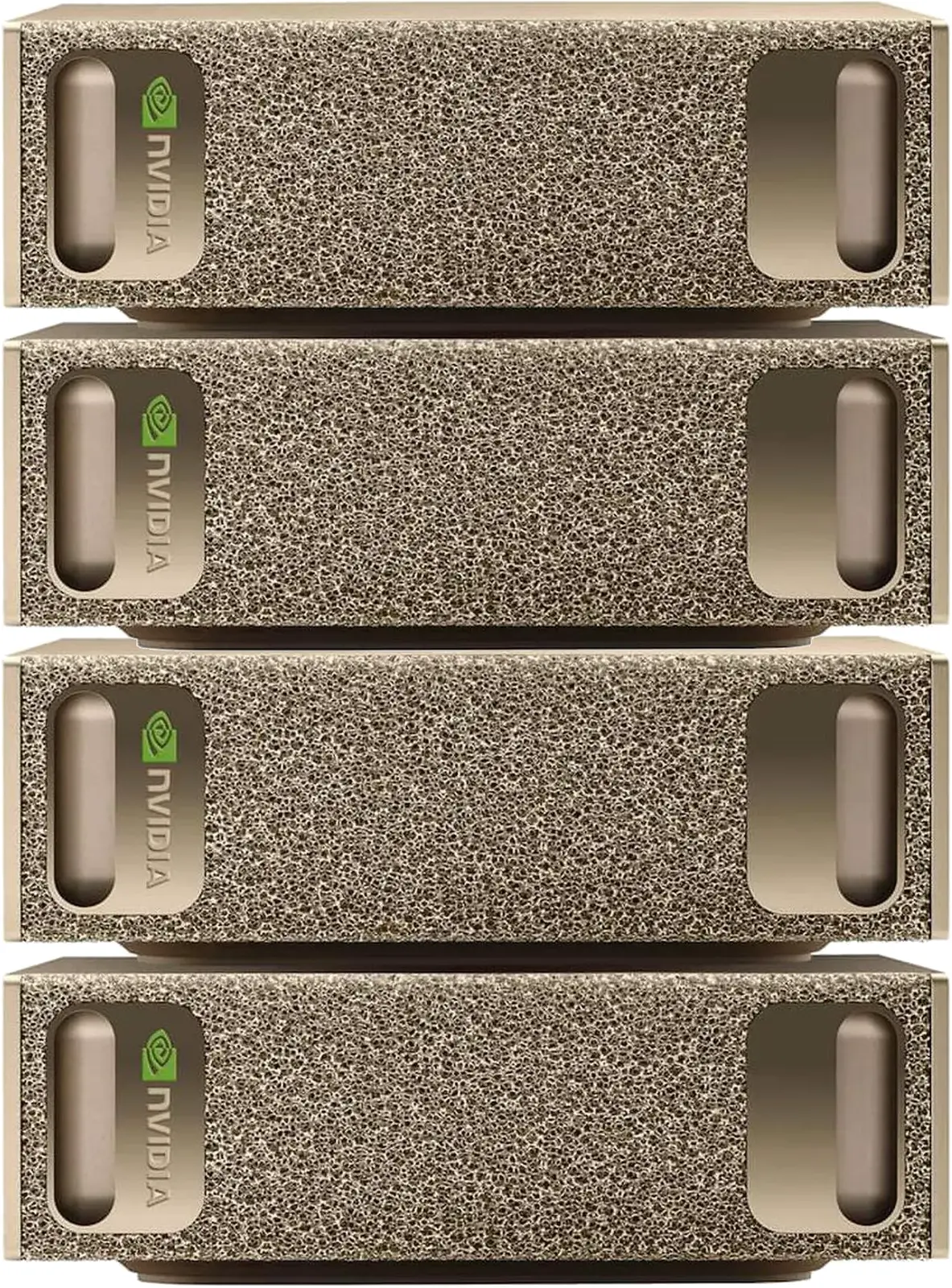
A single DGX Spark comfortably serves models up to roughly 200 billion parameters locally. For larger models, two units link directly over ConnectX-7 QSFP ports into a combined 256 GB unified memory pool, and up to four units can be joined through a managed 200 GbE RoCE switch fabric for a 512 GB coherent pool — the same clustering path validated by NVIDIA at GTC 2026.
| Configuration | Total Unified Memory | Link | Max Model Parameters |
|---|---|---|---|
| Single unit | 128 GB | N/A | ~200B |
| 2-Unit Cluster | 256 GB | Direct QSFP DAC, 200 Gbps | ~400B |
| 4-Unit Cluster | 512 GB | Managed RoCE 200 GbE switch fabric | 700B+ |
Ecosystem & Long-Term Scaling Path
Because DGX Spark runs the same DGX OS and NVIDIA AI software stack used across NVIDIA DGX Cloud and datacenter DGX systems, workloads developed locally — containers, NIM deployments, fine-tuning pipelines — carry forward without modification when it becomes time to move from a desktop prototype to a larger production deployment.