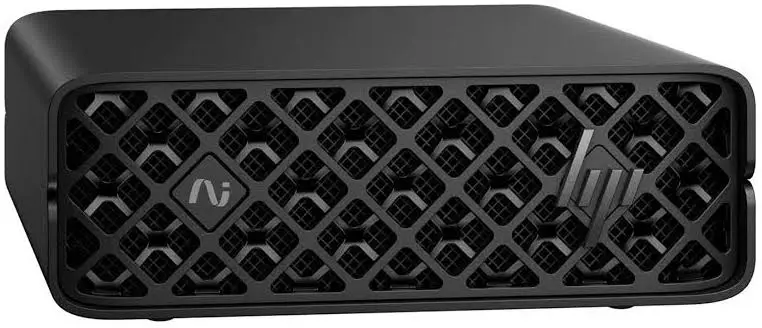
HP ZGX Nano G1n AI Station
Use this to tell your different configurations apart in your cart — handy if you order the same product with different options.
Full Specifications
Compute & Memory
Chip
NVIDIA GB10 Grace Blackwell Superchip
Unified Memory
128 GB LPDDR5x (273 GB/s bandwidth)
AI Performance
1 PetaFLOP FP4 (1,000 TOPS)
Storage & Physical
Storage
Up to 4 TB PCIe Gen5 self-encrypting OPAL NVMe SSD
Dimensions
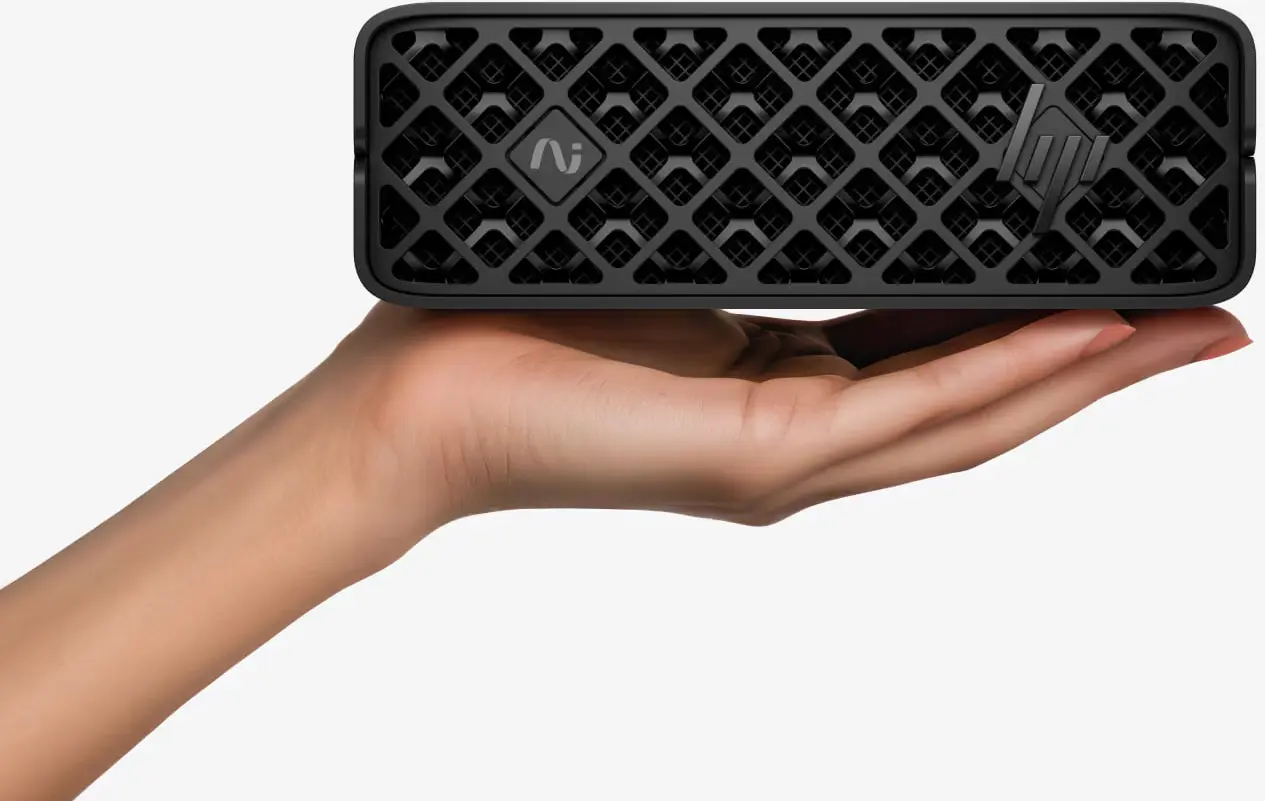
150 x 150 x 51 mm
Weight
1.2 kg
Power, Thermal & Acoustic
Power Supply
240 W USB-C PD adapter
Acoustic Profile
22 dBA idle · 27.6 dBA peak load
Thermal Profile
CPU: 77.3 °C peak · GPU: 69 °C peak
Security & Compliance
Certifications
FIPS 140-2 (TPM 2.0), Common Criteria EAL4+, TAA compliant
Boot Security
BIOS-level secure boot & PXE lockdown
Data at Rest
Self-encrypting OPAL NVMe SSD
Regulated Environments
Optional variant with Wi-Fi & Bluetooth hardware omitted
Connectivity
Networking
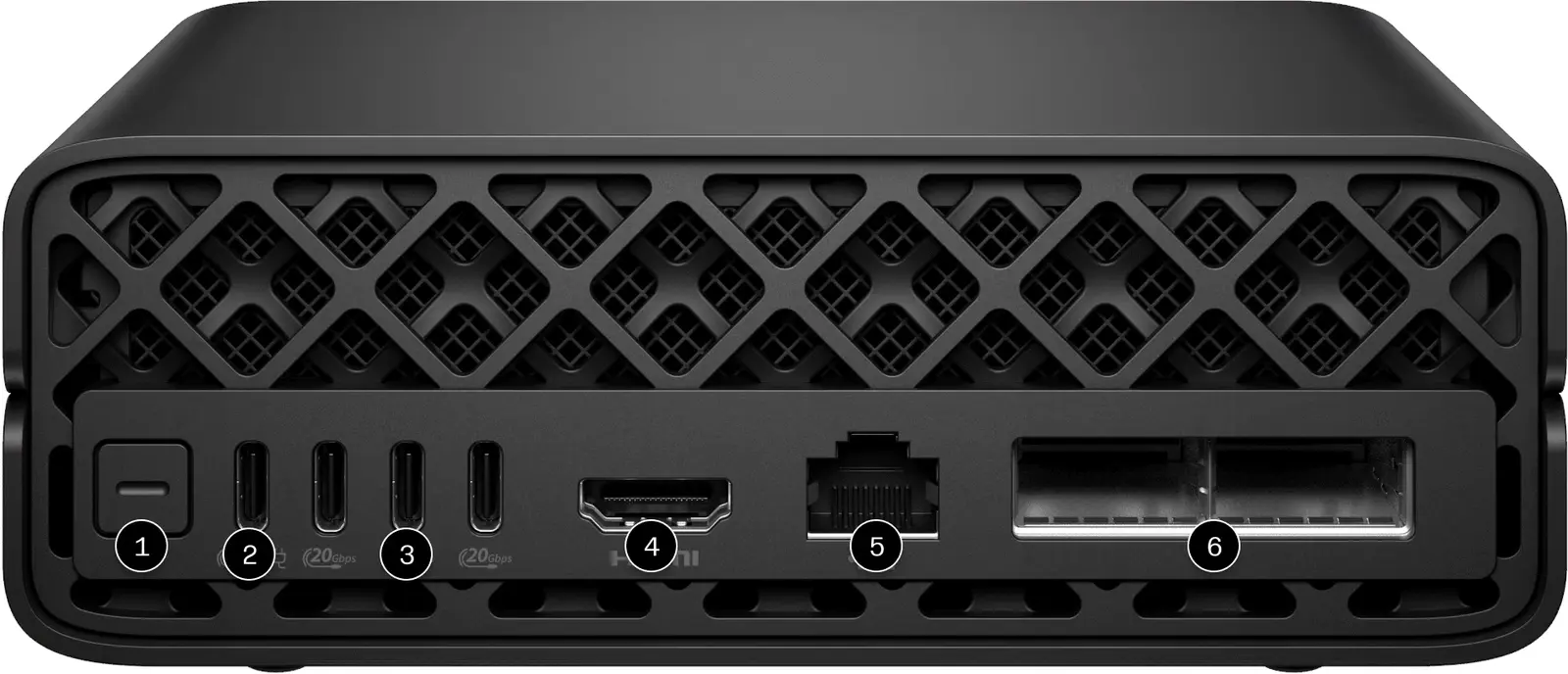
NVIDIA ConnectX-7 Smart NIC, dual 200 Gbps QSFP
Wireless (standard)
Wi-Fi 7 (2x2 MIMO), Bluetooth 5.4
Remote Management
HP Remote System Controller (BIOS-level KVM)
Sustainability
Chassis Materials
Up to 75% recycled aluminum, 20% recycled steel
Packaging
Up to 93% recycled content
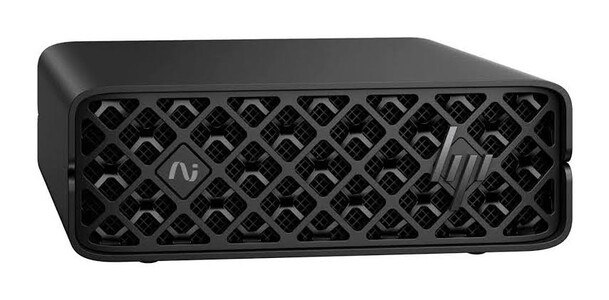
The HP ZGX Nano G1n AI Station was introduced on October 2, 2025 as HP's dedicated entry into the NVIDIA GB10 Grace Blackwell ecosystem, built for the era of agentic AI development on secure, on-premises hardware.
The system is engineered around three pillars that set it apart for regulated and security-conscious buyers: a FIPS 140-2 certified TPM 2.0 combined with Common Criteria EAL4+ certification, a chassis built from 75% recycled aluminum, 20% recycled steel and that ships in packaging containing up to 93% recycled content, and one of the quietest acoustic profiles available in a GB10-class system.
For organizations that require full network isolation — defense, intelligence, critical infrastructure, and EMI-sensitive healthcare environments — HP also offers a Secure & Regulated Environments configuration with Bluetooth and Wi-Fi radios physically omitted at the hardware level, removing wireless attack surface entirely rather than merely disabling it in software.
Independent thermal testing confirms this security- and sustainability-first design does not come at the cost of stability: sustained CPU peaks of 77.3 °C and GPU peaks of only 69 °C under multi-hour inference workloads, paired with a free, pre-configured AI development toolkit and BIOS-level remote fleet management via HP Remote System Controller.
Hardware Specifications
The ZGX Nano G1n delivers 1 petaFLOP of FP4 AI performance (1,000 TOPS) in a palm-sized enclosure. It pairs a 20-core Arm-based processor (10 × Cortex-X925 performance cores + 10 × Cortex-A725 efficiency cores) with 128 GB LPDDR5x unified memory offering 273 GB/s bandwidth, enough to run models up to 200 billion parameters locally. Storage is a self-encrypting OPAL NVMe SSD available up to 4 TB on PCIe Gen5, with native GPU Direct Storage (GDS) support measured at up to 5.5 GiB/s sustained read throughput directly from disk to GPU, eliminating CPU bottlenecks when loading large models.
Connectivity & Networking
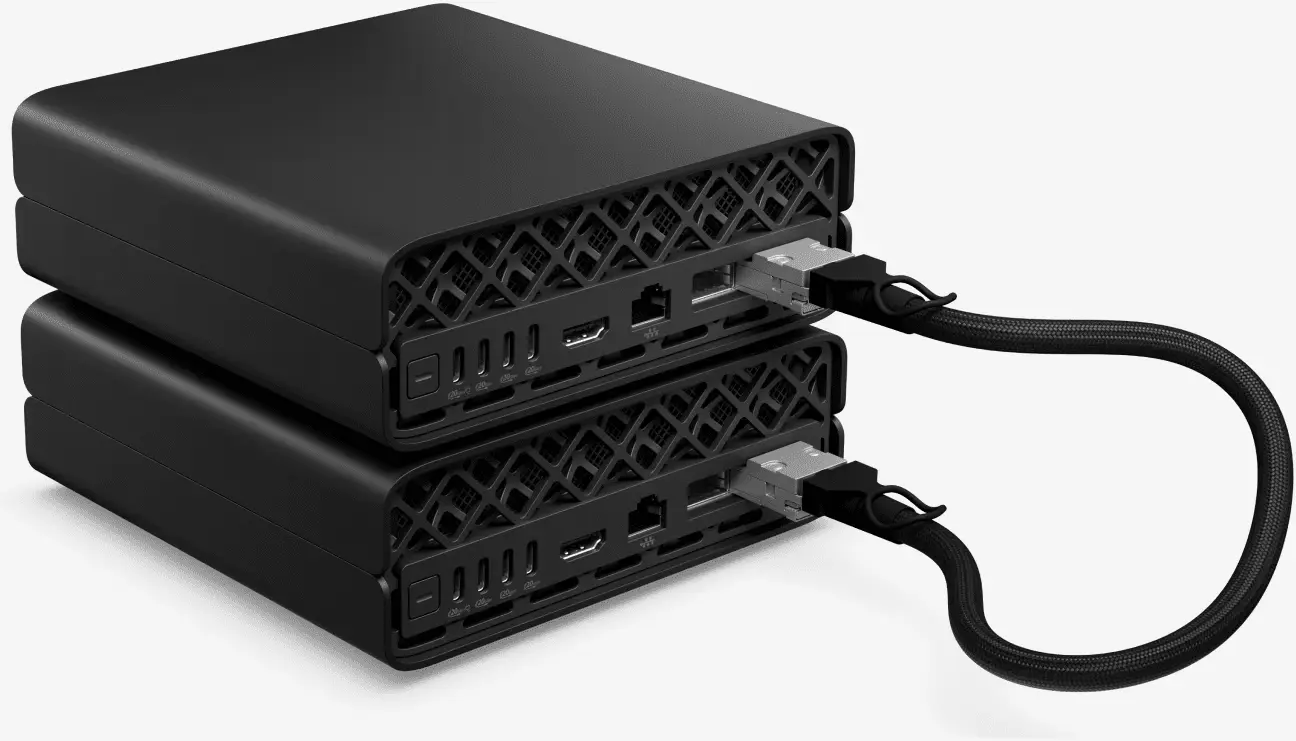
The ZGX Nano G1n integrates an NVIDIA ConnectX-7 Smart NIC with dual 200 Gbps QSFP ports for direct peer-to-peer unit linking, alongside 10 GbE Ethernet (RJ-45), Wi-Fi 7 (2×2 MIMO), and Bluetooth 5.4 on the standard configuration. Display and peripheral I/O comprises 3 × USB-C ports (20 Gbps, DisplayPort 1.4a alt-mode) and HDMI 2.1a, all clearly labeled at the rear panel. HP Remote System Controller (RSC) adds BIOS-level KVM (keyboard-video-mouse access) and virtual media support, independent of the host operating system — allowing IT teams to provision, update, and troubleshoot deployed units without an on-site visit.
Software & AI Development Toolkit
Pre-installed NVIDIA DGX OS (Ubuntu 24.04 LTS) is complemented by the free HP ZGX Toolkit, a curated development stack including PyTorch, TensorFlow, and JAX, MLflow experiment tracking, Ollama with OpenWebUI for local model serving, JupyterLab, VS Code Server, and CUDA 12.9/13.0 — all pre-configured out of the box. HP's own measurements show meaningfully shorter setup times versus manual environment configuration: roughly 40% faster prototyping, 44% faster fine-tuning, and 47% faster inference setup, so development time is spent on models rather than tooling.
Thermal Efficiency & Acoustic Performance
Independent thermal testing by Storage Review confirms sustained stability across multi-hour inference sessions:
- CPU Temperature: Peaks at 77.3 °C under sustained load, remaining well within safe thermal thresholds throughout extended sessions.
- GPU Temperature: Reaches only 69 °C peak, supported by an efficient forced-air cooling design.
- Acoustic Profile: Just 22 dBA at idle and 27.6 dBA under full sustained load — quiet enough for desk-side use in an office or collaborative space.
- NVMe/NIC Temps: NVMe remains under 54 °C; the network interface peaks at 68 °C, both comfortably within safe operating ranges.
Single-Unit Performance Benchmarks
Independent vLLM online-serving benchmarks across multiple model sizes and workload patterns confirm strong single-unit throughput, particularly on prompt-processing (prefill-heavy) workloads:
| Model & Workload | Peak Throughput |
|---|---|
| GPT-OSS 20B (Prefill Heavy) | 4,345 tok/s |
| Llama 3.1 8B (FP4, Balanced) | 2,774 tok/s |
| GPT-OSS 120B (Prefill Heavy) | 2,773 tok/s |
| Qwen3 Coder 30B (FP8, Prefill Heavy) | 2,069 tok/s |
| GPT-OSS 120B (Balanced ISL/OSL) | 723 tok/s |
Multi-Unit Clustering
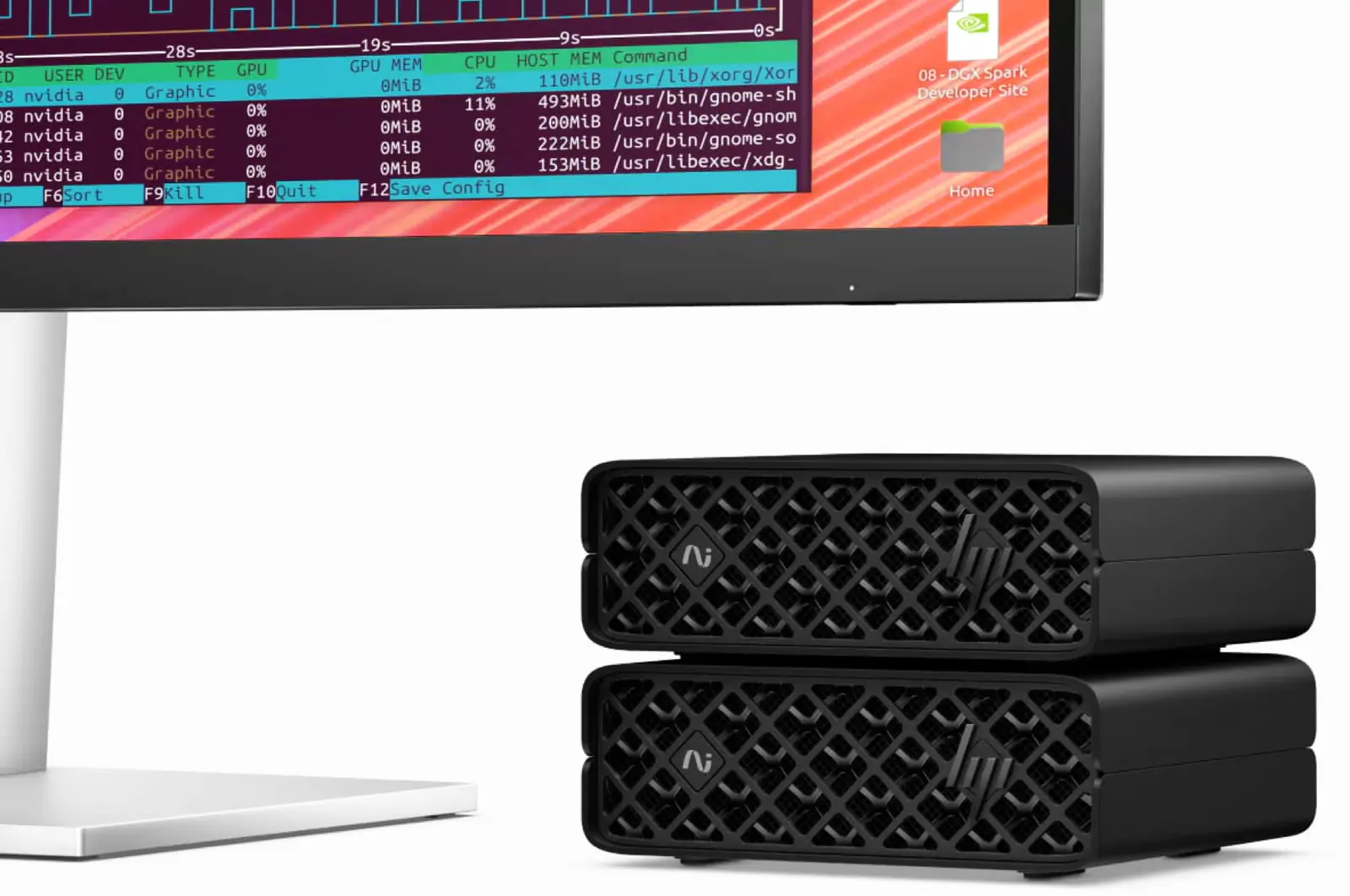
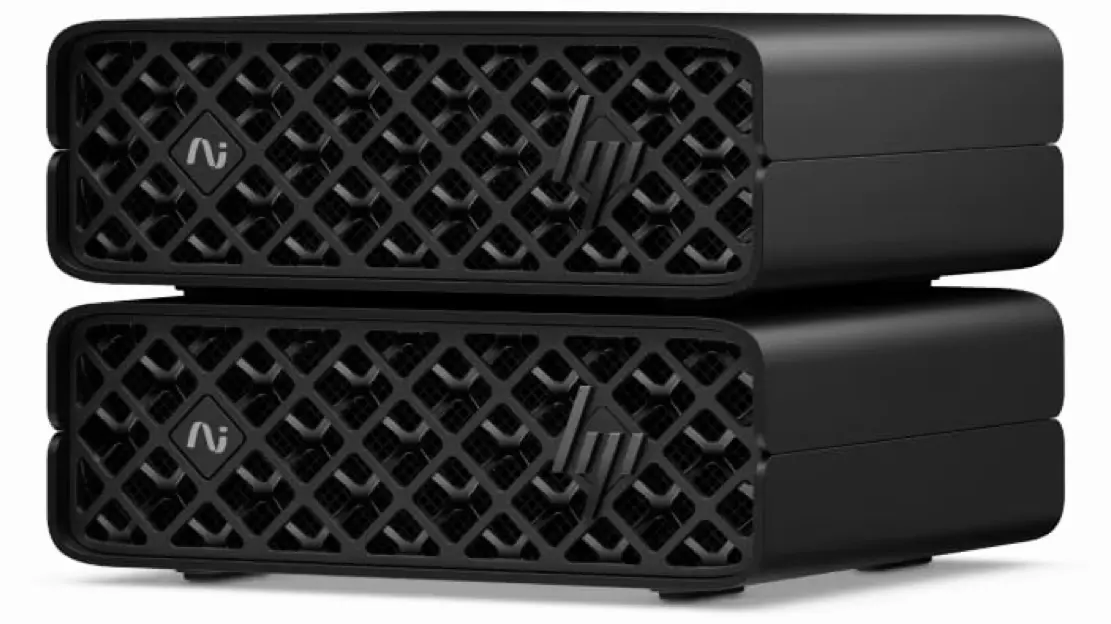
Two ZGX Nano G1n units link directly via their onboard ConnectX-7 200 Gbps QSFP ports — no switch or additional networking hardware required — combining into a single 256 GB unified memory pool capable of running models up to 400 billion parameters.
| Component | Single Unit | 2-Unit Cluster (ConnectX-7 QSFP) |
|---|---|---|
| Total Memory | 128 GB LPDDR5x | 256 GB (2 × 128 GB) |
| Local Memory Bandwidth (per node) | 273 GB/s | 273 GB/s (per node) |
| Inter-Node Link | N/A | Dual 200 Gbps QSFP, direct peer-to-peer (DAC) |
| Max Model Parameters | 200B | 400B+ |
Pricing & Availability
Entry Price: ₹3,82,033.02. The price includes the full HP ZGX Toolkit, FIPS 140-2 certified TPM 2.0, Common Criteria EAL4+ certification, and self-encrypting OPAL storage as standard — with no additional licensing required to unlock the enterprise security or development software stack.