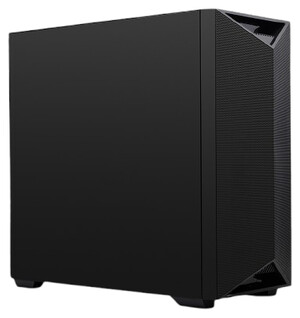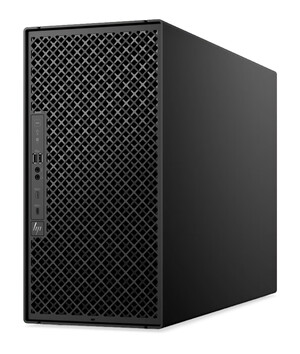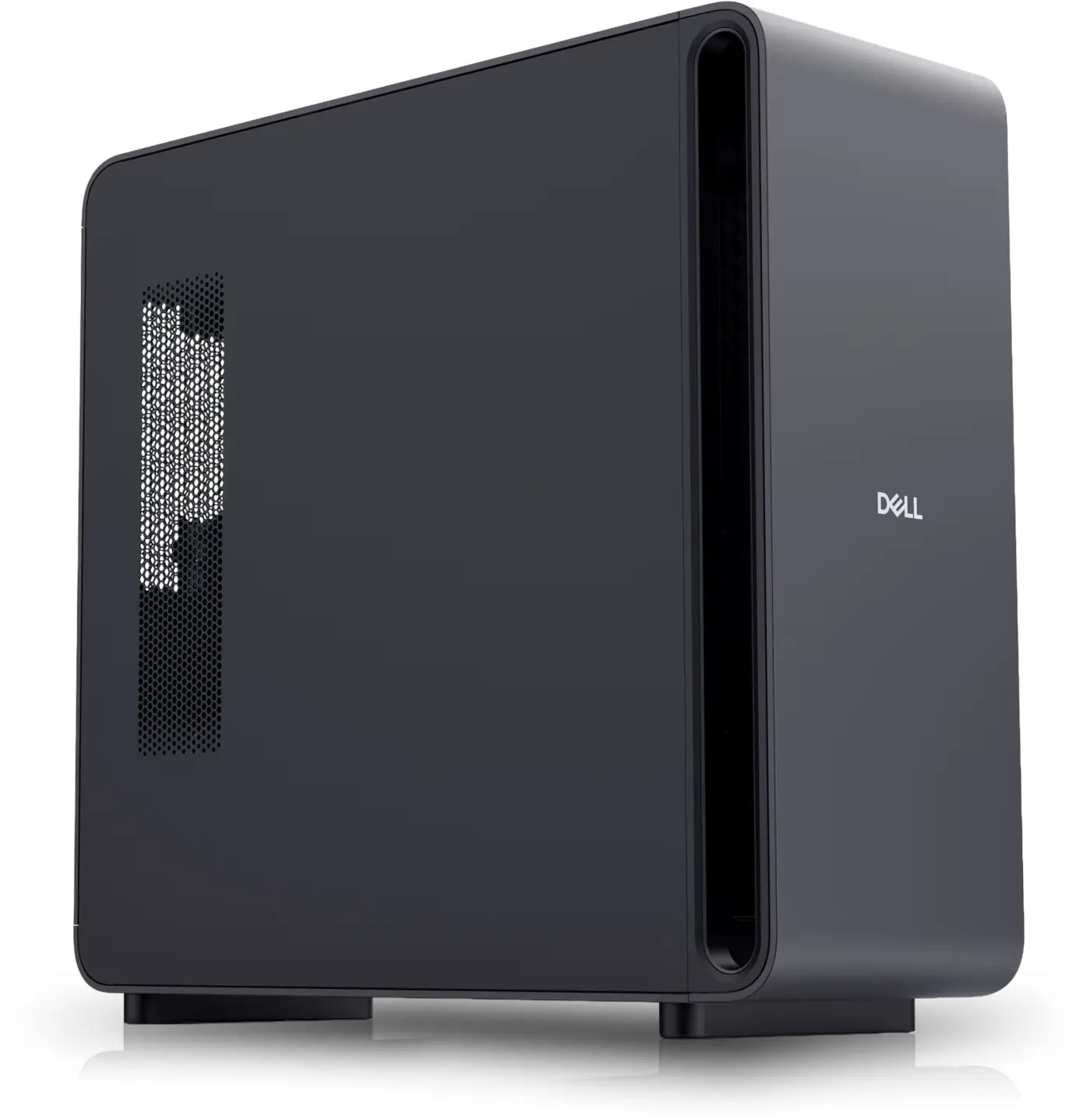
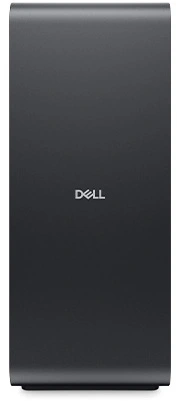
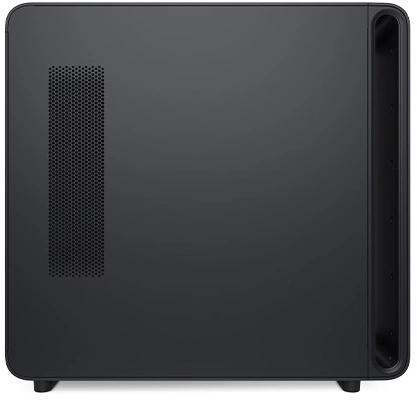
Dell Pro Max with GB300 AI Workstation
Use this to tell your different configurations apart in your cart — handy if you order the same product with different options.
Full Specifications
Compute & Memory
Superchip
NVIDIA GB300 Grace Blackwell Ultra Desktop Superchip
CPU
1× NVIDIA Grace CPU Superchip, 72 Arm Neoverse V2 cores
AI GPU
1× NVIDIA Blackwell Ultra GPU
Visualization GPU
1× NVIDIA RTX PRO 2000 Blackwell Edition, 16 GB GDDR7 (standard; upgradable)
Coherent Memory
748 GB unified: 496 GB LPDDR5X + 252 GB HBM3e
AI Performance
20 PetaFLOPS (FP4)
Storage & Physical
Storage
4× M.2 PCIe 5.0 x4 NVMe, 16 TB total, self-encrypting (SED)
Form Factor
Deskside tower, NVIDIA DGX Station architecture
Dimensions
25 x 56.9 x 61 cm
Networking & Expansion
High-Speed Networking
2× 400G QSFP112 ports via NVIDIA ConnectX-8 SuperNIC
Standard Networking
Dual 1GbE + 1× 10GbE, no onboard Wi-Fi/Bluetooth
Expansion & Physical Security
USB 3.2 Gen 2 (10 Gbps), Kensington lock slot
Power & Thermal
Power Supply
1600 W Titanium PSU, C19 enterprise inlet
Cooling
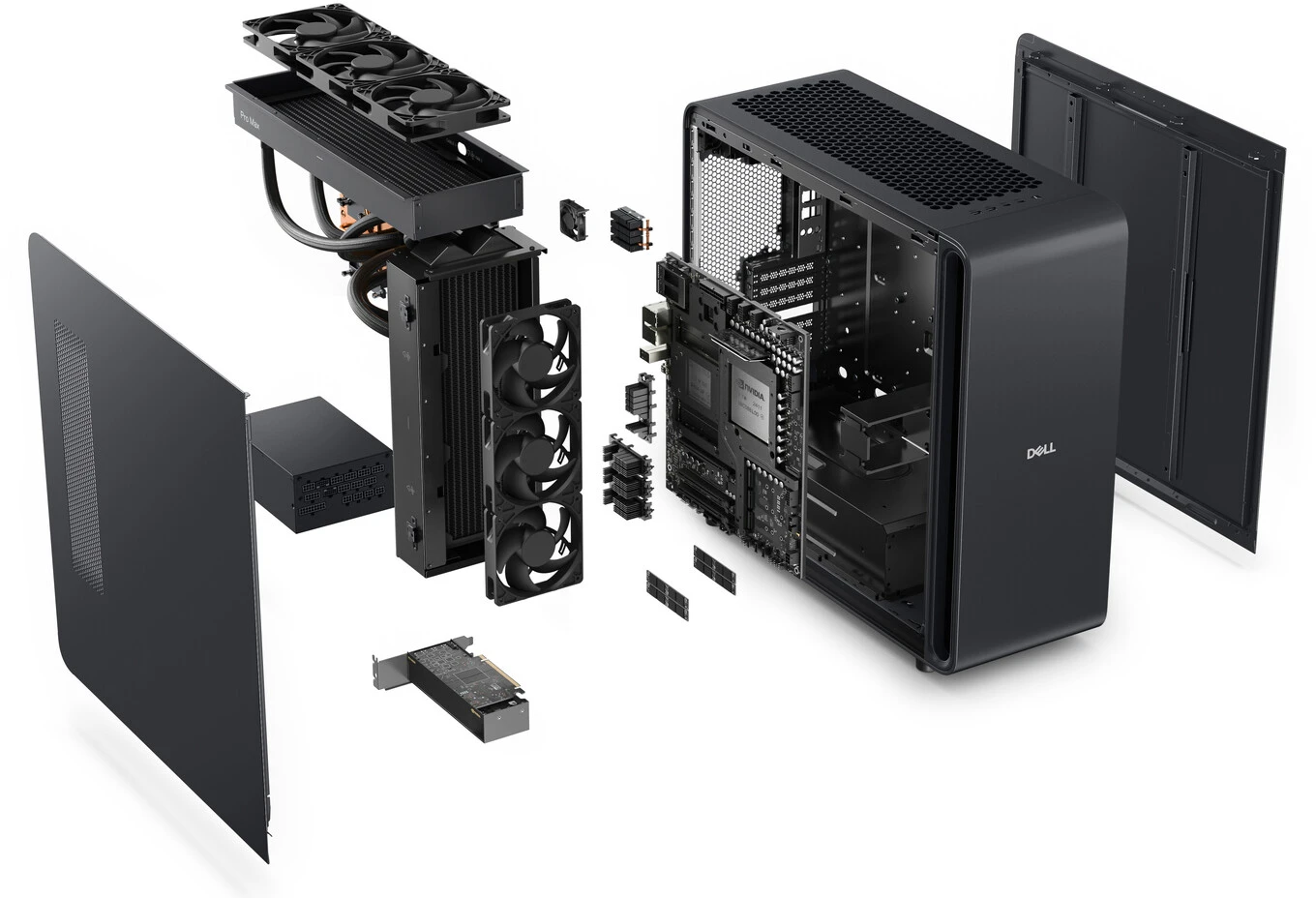
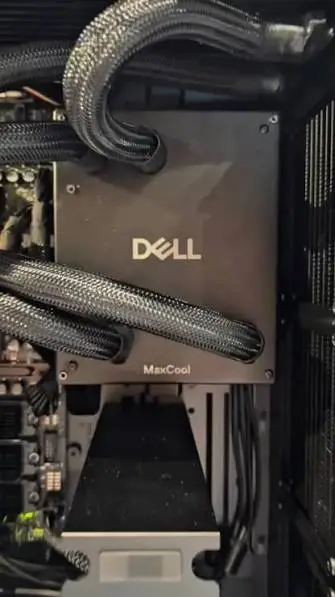
Dell MaxCool closed-loop liquid cooling, engineered for sustained AI workloads
Management & Software
Operating System
NVIDIA DGX OS with pre-installed AI Developer Tools (CUDA, cuDNN, Triton, JupyterLab)
Security
TPM 2.0, Secure Boot, self-encrypting NVMe storage
Remote Management
Dell Client Command Suite, remote monitoring and update management
Dell introduced the Pro Max with GB300 on January 6, 2026, positioning it within the NVIDIA GB300 Grace Blackwell Superchip ecosystem as a deskside system built to run trillion-parameter models locally, paired with dedicated visualization acceleration and enterprise-grade data isolation.
Hardware Specifications
The Pro Max with GB300 is built around a single NVIDIA Grace CPU Superchip — 72 Arm Neoverse V2 cores and 496 GB LPDDR5X memory — paired with an NVIDIA Blackwell Ultra GPU with 252 GB HBM3e GPU memory, unified through NVLink-C2C into a coherent memory pool of 748 GB. A dedicated NVIDIA RTX PRO 2000 Blackwell Edition GPU (16 GB GDDR7) handles display and visualization output independently from the AI compute path. The system provides 4× M.2 NVMe SSDs (16 TB total, self-encrypting) and a dual-port NVIDIA ConnectX-8 400G SuperNIC, supplemented by dual 1GbE and a 10GbE port for standard office network integration.
Dual-GPU Design: AI Inference and Visualization Together
Rather than sharing a single GPU between AI and display duties, the Pro Max with GB300 pairs its Blackwell Ultra AI accelerator with a separate visualization GPU. This keeps the full 748 GB coherent memory pool and AI compute budget available for model inference, while day-to-day display output, dataset visualization, or lightweight rendering work runs on its own graphics path instead of competing with AI workloads for resources. For SMBs where the same machine may double as a reporting or dashboard workstation alongside its AI duties, this separation keeps sustained inference performance predictable. The standard RTX PRO 2000 Blackwell Edition GPU can be upgraded to the NVIDIA RTX PRO 6000 Blackwell Edition (96 GB GDDR7).
MaxCool Thermal Engineering
Dell MaxCool is a closed-loop liquid cooling design engineered specifically for the sustained, always-on workloads a shared local AI system is expected to handle. According to Dell, the solution removes heat up to five times more effectively than reference thermal designs, allowing the Pro Max with GB300 to sustain full AI performance during long inference or agent sessions without thermal throttling.
Local AI Server for Business Use
The Pro Max with GB300 is designed to function as a shared local AI resource. Multiple employees can submit document processing tasks — contract review, invoice extraction, report drafting, email triage — throughout the working day, with jobs handled centrally on-site instead of routed through external cloud services.
Through NVIDIA NemoClaw, autonomous agents can run continuously on the system, handling recurring tasks such as inbox monitoring or scheduled report generation without requiring a person to initiate each request. This allows the Pro Max with GB300 to operate as ongoing AI infrastructure for the business, supporting steady document workloads.
Enterprise Security and Data Isolation
All four NVMe drives are self-encrypting, and the system includes TPM 2.0, Secure Boot, and a Kensington lock slot for physical anti-theft measures in shared office spaces. Dell and NVIDIA are additionally developing an air-gapped configuration of the platform for classified and federal deployments, extending the same isolation principle to environments with the strictest data-sovereignty requirements.
Cost Comparison: On-Premises vs. Cloud AI APIs
For SMBs processing high volumes of documents on a daily basis, the difference between an on-premises system and cloud AI billing compounds significantly over time.
| Cost Category | Cloud AI APIs | Dell Pro Max (On-Premises) |
|---|---|---|
| Initial hardware investment | None | ₹1.22 Cr (one-time) |
| Year 1 operating cost | ~€100k – ~€200k | ~€4k (power & maintenance) |
| Year 2 operating cost | ~€100k – ~€200k | ~€4k (power & maintenance) |
| Year 3 operating cost | ~€100k – ~€200k | ~€4k (power & maintenance) |
| Cumulative 3-year cost | ~€300k – ~€600k | ~₹1.37 Cr |
Because processing takes place entirely on-site, documents and business data are not transmitted to third-party servers. This is a relevant consideration for organizations in legal, financial, or other data-sensitive sectors.
Summary
The Pro Max with GB300 combines trillion-parameter local AI capacity with a dedicated visualization GPU, self-encrypting storage, and Dell's MaxCool thermal engineering in a single deskside system. For SMBs with sustained AI workloads and elevated data security requirements, it offers a fixed-cost alternative to recurring cloud AI expenditure.